Liner notes · music-production · funk-pop · arrangement
Two Takes of "On the Bench," One Repair, Different Groove
Take B keeps the same hook and story as Take A but leans the arrangement toward a brighter, more electronic version of the same bench-repair groove.
In short
- Take B nudges the tempo up slightly and swaps the slap-bass low end for a more synthetic bassline.
- The horn section becomes synth stabs, giving the second take a slightly sleeker, less live-band feel.
- The hook, structure and story are unchanged — this is a remix of feel, not a rewrite.
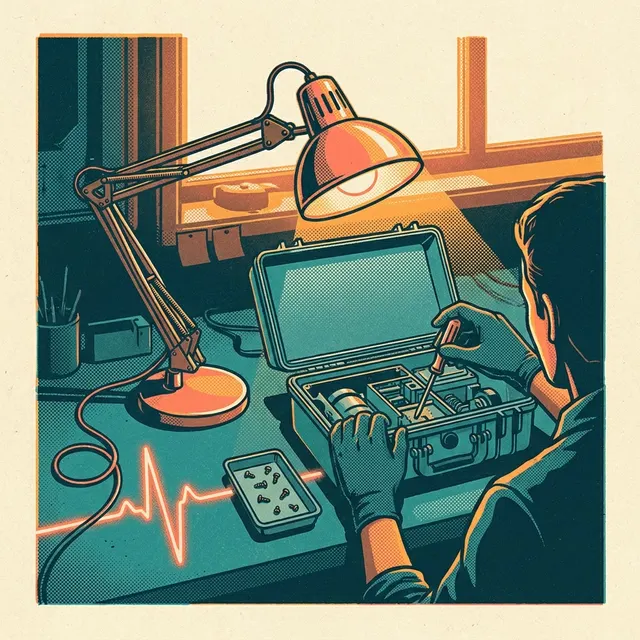
"On the Bench" exists in two takes on the station, recorded back to back and sharing almost every lyric. Where Take A tells the story straight, with a full-band nu-funk feel, Take B keeps the same words but shifts the sound underneath them — close enough to be the same song, different enough to be worth its own listen.
What changed between takes
The most noticeable shift is the low end: Take A rides a slap bass and a rhythmic electric guitar, while Take B trades that for a groovier, more synthetic bassline and a snappier electronic drum kit. The horn and brass hits that punctuate Take A's chorus become synth stabs in Take B — the same rhythmic accents, played on a different instrument entirely. The tempo also ticks up a few beats per minute, and the track runs about nine seconds longer, mostly from a slightly extended outro.
What to listen for
Both takes keep the DJ vinyl scratches that punctuate the pre-chorus, which is the clearest fingerprint tying the two versions together — listen for that scratch effect right before "on the bench" comes back in, and you'll hear it land almost identically in both takes even as everything else around it changes texture. Like everything on the station, both takes were produced with AI-assisted tools and shaped by our team, which is part of how two distinct arrangements of the same song could exist side by side in the first place.
Neither take changes what the song is about — a technician working a fault to ground, one test at a time — but the choice between them is really a choice of room. Take A sounds like a live band that happens to be very good at its job. Take B sounds like that same band after someone turned all the amps into synthesizers. Put them back to back and the difference is obvious inside the first ten seconds.