Behind the song · refurbishment · sustainability · repair
The Storeroom Monitor Behind 'A Second Life'
A synth-pop dance track about a machine pulled from storage, built around the real, unglamorous science of proving an old device is trustworthy again.
In short
- The song's idea, a machine written off in storage, given a working second life, mirrors a real and growing practice in healthcare technology.
- Roughly 62 million tonnes of e-waste are generated worldwide every year, and under a quarter of it is formally recycled.
- The song's closing image, signing a safety sheet, reflects a real legal line between restoring a device to its original spec and changing it into something new.
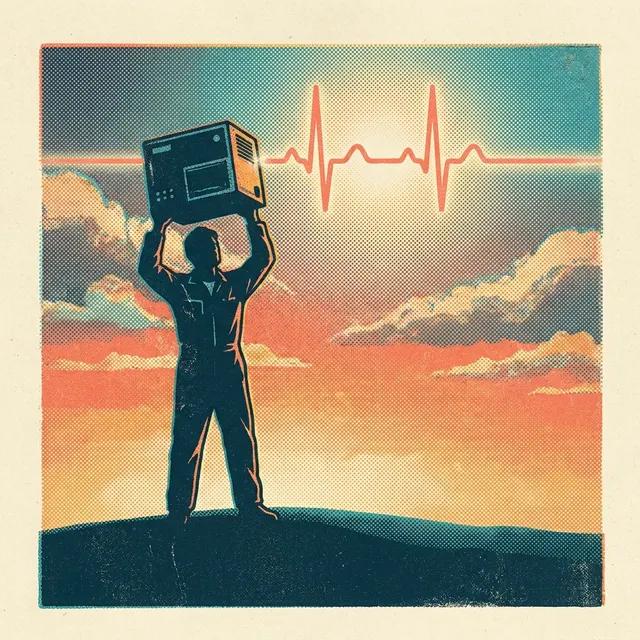
"A Second Life" starts in a storeroom corner, under dust and paper signs, with a monitor that's been sitting so long it holds only "one faint promise." The song's engine is a simple reversal: the machine everyone had quietly stopped thinking about turns out to be salvageable, once somebody actually checks.
Where the song came from
The idea is grounded in a real and growing practice rather than a fantasy. Roughly 62 million tonnes of electronic waste are generated worldwide every year, and less than a quarter of it is formally recycled, a meaningful share of it equipment that still works or could, with the right hands and the right parts. The song's version of that process is compressed into a few verses, inspecting every circuit, tracing the fault end to end, replacing a worn-out power supply, but the sequence itself is accurate to how a real restoration actually proceeds: nothing gets trusted until it's been checked.
They inspected every circuitTraced the fault from end to endChanged the worn out power supplyCalled an old supplier friend
Why the safety sheet gets the last word
The song's closing image before its final chorus is quiet and procedural: a signed safety sheet. That's not a throwaway detail. Federal guidance draws a specific line between servicing a device, restoring it to the exact safety and performance specifications its original maker set, and remanufacturing it into something different, which carries a much heavier regulatory burden. "A Second Life" stays clearly on the servicing side of that line, its crew replaces a worn part with an equivalent one and confirms the device meets its original spec, rather than trying to improve on the original design. Signing off on that distinction, in real restoration work and in the song, is what turns a rescued object back into a trustworthy one.
The song ends on the phrase "a second life, and we move forward together," which is a fair summary of what actually makes this kind of work matter. Not the moment a dead screen flickers back on, but the ordinary, checkable process that happens in between.
Not every rescue attempt works
It's worth saying plainly what the song leaves implied: not every device found in a storeroom corner earns a second life. Part of what real refurbishment work does is decide, case by case, which machines are worth the labor of restoration and which aren't, based on parts availability, documented history, and whether the unit can still meet its original specification. "A Second Life" only tells us about the one that made it. That's a fair choice for a song, but it's worth remembering that the careful testing the lyric describes exists as much to say no as to say yes.
Sources
- Refurbished Medical Equipment Supports Sustainability in Healthcare, Oncology Systems
- Remanufacturing of Medical Devices: Guidance for Industry and FDA Staff, Federal Register / U.S. Food and Drug Administration