Behind the song · global health · equipment donation · repair
The Village Repair Behind 'When the Equipment Wakes'
A synth-rock musical-theatre number turns a stalled piece of medical equipment and a remote network of engineers into an anthem about global repair.
In short
- The song's rescue story mirrors a real global-health practice: refurbishing and redistributing medical equipment instead of scrapping it.
- Roughly 62 million tonnes of e-waste are generated worldwide each year, and under a quarter of it is formally recycled.
- Its "local hands" ending echoes a real fight in the field over hospitals' right to access the diagnostic tools needed to fix their own equipment.
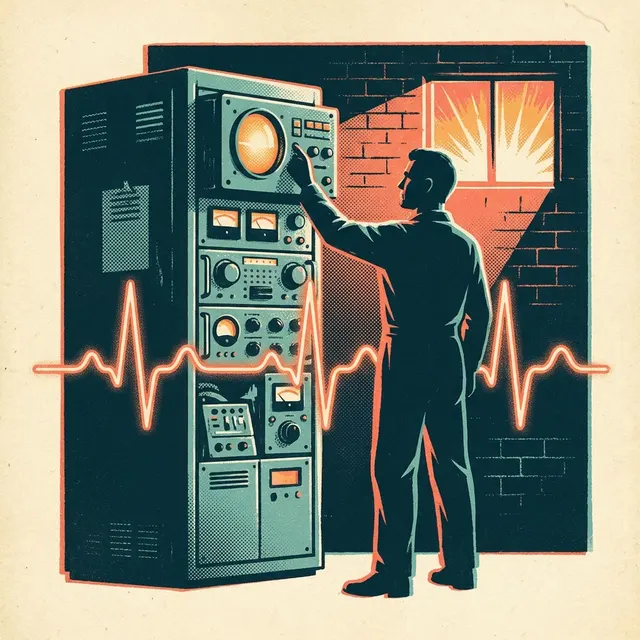
"When the Equipment Wakes" tells one composite story: a technician named Mara finds a dead machine "beneath the hospital wing," and rather than scrapping it, pulls in help from far outside her own building, a supplier who tracks down a part, a hospital that opens its records, a trainer who teaches the fix forward. The song never names a place, but it's describing something real: the global network of engineers and technicians who keep donated or aging medical equipment alive in places that can't simply order a replacement.
Where the song came from
The idea is built around a real and stubborn problem in global health technology: getting equipment into a low-resource clinic is only half the job. Around 62 million tonnes of electronic waste are generated worldwide each year, and less than a quarter of it is formally recycled, a lot of it usable equipment that simply never found the right hands. The song's answer to that waste is exactly the one biomedical engineering already practices: a refurbished machine, tested and documented, given to a place that needs it. A refurbished linear accelerator shipped to a cancer center in Guatemala is a real example of the same idea the song is singing about, extending a machine's working life while lowering both its cost and its footprint for a place that couldn't otherwise afford one.
Rise again, old heart of steelTurn the light on, make the future realEvery careful hand, every part we've foundIt's the living answer from the silence of the ground
A network bigger than one workshop
The song's leap from "one town" to "humanity" isn't an exaggeration of scale so much as a description of how this kind of work actually moves. Attendees at the field's flagship U.S. conference have described moving roughly 250 semi-truck trailers of donated medical equipment into more than 138 countries over the years, proof that the kind of long-distance help Mara gets in the song, "a hundred distant voices" joining "one steady line," has a real-world equivalent. The World Health Organization keeps its own running list of priority medical devices for the conditions that hit under-resourced health systems hardest, from cancer to maternal and newborn care, specifically so a clinic isn't stuck buying whatever a distributor happens to have on hand.
The song's insistence that "local hands become the guardians" also brushes against another real debate in the field: hospitals and clinics being locked out of the diagnostic tools and manuals they need to keep their own equipment running. An estimated 80% of medical device manufacturers deny hospitals access to that kind of service information, forcing technicians to work blind or pay premium fees just to fix what's already theirs. A song that treats local hands learning a repair as the actual victory, not a fallback, is taking a side in that same argument.
None of that makes the song a documentary. It's a compressed, hopeful version of a process that in real life takes patience, paperwork, and more failed attempts than successful ones. But the shape of the idea, a machine that looks finished and a scattered group of people who refuse to agree with that, is drawn straight from how biomedical equipment actually gets a second life.
Sources
- Refurbished Medical Equipment Supports Sustainability in Healthcare, Oncology Systems
- What Not to Miss: 2026 AAMI Exchange, 24x7 Magazine
- Medical Devices, World Health Organization
- Life and Death: Medical Equipment Repairers Push for Right to Repair During COVID-19 Pandemic, PIRG