Field guide · electrical safety · equipment reuse · sterilization
How a Rescued Machine Gets Cleared Safe: The Field Guide Behind 'Machines Left Behind'
The song follows a crew testing discarded equipment before it touches a patient again. Here's what that testing actually involves.
In short
- Field electrical safety testing on a hospital device follows a different standard than the one used to design it at the factory.
- Testing checks at least five separate paths a stray electrical current could take through a patient, not one generic "leakage" number.
- Federal guidance draws a hard legal line between servicing a device back to spec and remanufacturing it into something new.
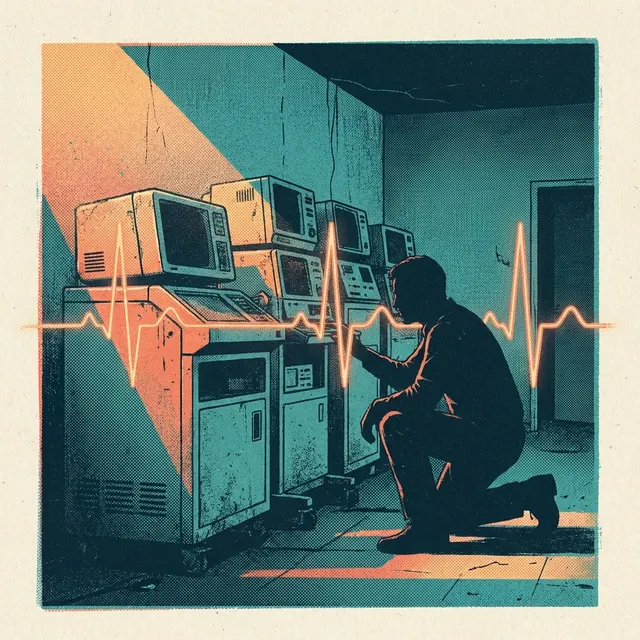
"Machines Left Behind" spends most of its runtime on a single idea: finding an old piece of equipment is the easy part. The song's crew walks "a yard of forgotten calls," but the chorus isn't really about discovery, it's about discipline, "we read the labels, we trace the chain, we test the heart before the name." That's not a poetic flourish. It's a fair description of what has to happen before a rescued device is allowed anywhere near a patient again.
The test that isn't the same test twice
A device's original electrical-safety design is checked against one standard at the factory. Once that same device is living in a hospital, it gets tested against a completely different standard built specifically for field conditions, and anything classified as life-support or otherwise critical has a minimum retest interval of 24 months. That distinction matters for a song about equipment pulled out of storage: passing a factory spec once, years ago, tells a crew almost nothing about whether the device is safe today.
We check the current seals and ground inWe test the limits under truthIf the history's missing, we set it asideIf the case seems compromised, we do not gamble lives
Five ways a current can travel
Field electrical safety testing doesn't check for one "leakage" number. It separately measures at least five distinct paths a dangerous current could take, because each path threatens a patient differently depending on what part of them is touching the device and what's touching everything else. That's the real-world version of the song's line about checking "the current, seals and ground," it's not one pass or fail, it's a set of separate questions the equipment has to answer.
Where fixing it stops and remaking it starts
Federal guidance draws a precise line between two very different activities that can look identical from the outside. Servicing a device means returning it to the safety and performance specifications the original manufacturer already set. Remanufacturing means making a change significant enough to alter its performance, safety, or intended use, and crossing that line means taking on a manufacturer's full regulatory burden. "Machines Left Behind" stays firmly on the servicing side of that line, its crew repeatedly checks whether a part still meets its original spec rather than trying to improve on it, which is exactly the legal and ethical boundary real refurbishment work has to respect.
None of this is glamorous, and the song doesn't pretend it is. Its bridge is essentially a documentation checklist set to music: "each screw got a number, each reading a page, each failure was logged, each risk was gauged." That's not filler. Paperwork is the difference between a rescued device and a liability, and a song willing to spend a whole verse on it is telling the truth about where the real work happens.
Sources
- Safety Testing of Medical Devices: IEC 62353 Explained, MD+DI
- Electrical Safety Standards and Basic Testing, Fluke Biomedical
- Remanufacturing of Medical Devices: Guidance for Industry and FDA Staff, Federal Register / U.S. Food and Drug Administration