Field guide · remote-monitoring · telehealth · home-care
"Across the Blue" and the Fleet That Leaves the Building
A field guide to the growing part of the job that happens nowhere near a hospital: managing devices that live in patients' own homes.
In short
- Hospitals increasingly ship pre-configured monitors, glucose meters and ECG patches directly to patients' homes.
- Managing that home-device fleet has become its own specialty, sometimes called "distributed biomed," with its own workflows.
- The song's imagery of a message "crossing water" fits a job that now has to troubleshoot equipment far outside hospital walls.
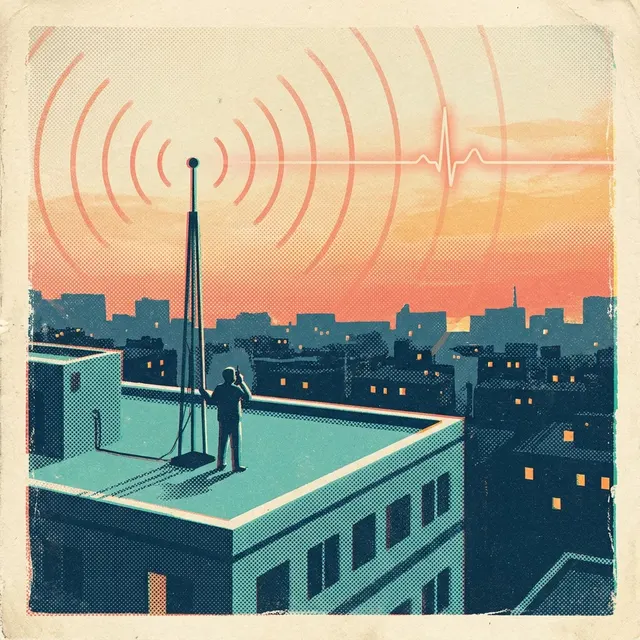
"Across the Blue" is a soaring, trance-leaning dance-pop track about distance and connection — "when your morning meets my midnight, we keep the signal strong." It reads as a song about global teamwork in the abstract, but its underlying idea maps onto a specific, fast-growing part of healthcare technology management: care and monitoring that no longer stays inside the hospital.
The production leans into that distance too, with layered vocal harmonies and a build that keeps rising rather than resolving, as if the song itself doesn't want to land in one time zone. That restlessness fits a part of the job that genuinely doesn't keep hospital hours anymore — a device shipped to a patient's home can raise a problem at any hour, from anywhere, on somebody else's internet connection.
The fleet that leaves the building
Hospitals now routinely ship pre-configured monitors, glucose meters and ECG patches straight to a patient's living room — devices that can cycle through multiple homes without ever coming back to the shop for a standard bench check. That shift has created what some in the field call "distributed biomed": a sub-team with its own provisioning process and its own service-level expectations, entirely separate from the hospital floor.
Then the message crosses waterCarrying what we needA diagram, a patient answerA steady hand to lead
A different kind of troubleshooting
Supporting that fleet means solving problems that never existed inside hospital walls — an unpredictable home internet connection, an outage from a patient's own internet provider, spotty cellular coverage, none of which biomedical teams used to have to think about at all. "A coastal lab is closing as another starts the day" captures something real about that shift too: monitoring now runs on a schedule closer to a patient's life than a hospital's shift change. There's no clean handoff at the end of a shift when the equipment being watched never actually left someone's living room.
Every screen and every lifelineHeld by hands that understandShared knowledge moving through the distanceKeeping every community prepared
"No border holds the care we share" is a big claim for a pop chorus, but it's not far from how the field itself describes this shift — devices, and the people responsible for them, increasingly following patients well past the hospital door. "A coastal lab is closing as another starts the day, someone names a hidden fault and shows a safer way" is a fair, if lyrical, description of what that kind of round-the-clock, distributed coverage actually looks like from the inside. Nobody hands off a single shift here; the work simply moves to wherever the sun currently is, following the fleet rather than waiting for it to come back through a loading dock.